
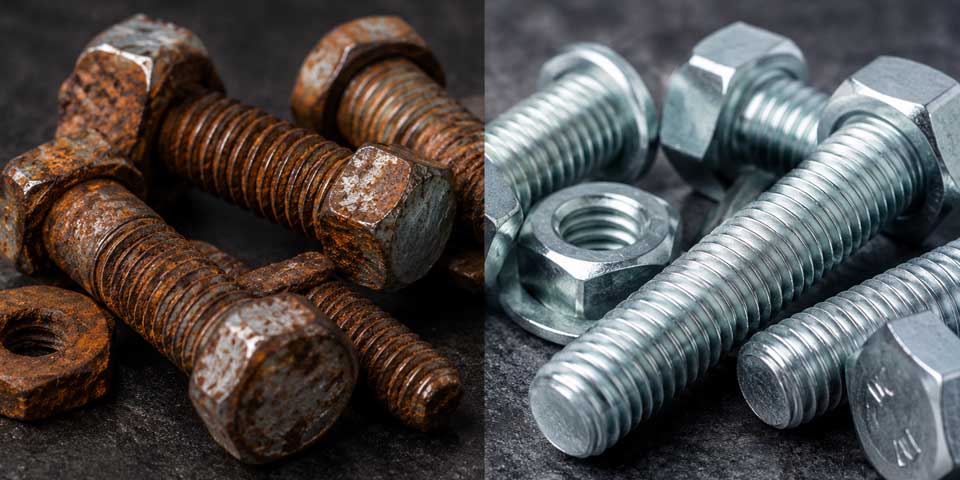
When engineers, maintenance managers, procurement teams, and manufacturers evaluate corrosion protection options, zinc plating is often one of the first solutions considered. Zinc coatings have been used for decades to protect fasteners, structural components, and industrial equipment from rust and environmental degradation.
However, today’s industrial environments are becoming increasingly demanding. Exposure to chemicals, road salt, moisture, extreme temperatures, and harsh operating conditions has many organizations questioning whether traditional zinc plating is still the best solution.
In many applications, specialty protective coatings are delivering longer service life, reduced maintenance costs, and significantly better long-term performance.
So which option lasts longer? The answer depends on the environment, application, and performance requirements.
Why Corrosion Protection Matters
Corrosion costs industries billions of dollars every year through:
- Equipment failures
- Unplanned downtime
- Increased maintenance
- Replacement costs
- Safety concerns
- Reduced asset lifespan
Whether you’re protecting fasteners, infrastructure, machinery, or critical industrial components, selecting the right protective system can dramatically impact long-term performance.
The goal isn’t simply preventing rust today—it’s maximizing service life for years to come.
What Is Zinc Plating?
Zinc plating is a process that deposits a thin layer of zinc onto steel or iron components.
The zinc coating acts as a sacrificial layer that corrodes before the underlying steel.
This process helps delay rust formation and provides basic corrosion resistance in many applications.
Common uses include:
- Nuts and bolts
- Screws
- Washers
- Automotive components
- Construction hardware
- General industrial fasteners
Because zinc plating is relatively affordable and widely available, it remains one of the most common corrosion protection methods used today.
How Zinc Protects Metal
Zinc works through sacrificial protection.
Even if the coating becomes scratched or damaged, zinc continues protecting exposed steel because it corrodes first.
This characteristic provides an advantage over simple paint systems that may fail immediately once damaged.
However, sacrificial protection has limitations.
Once enough zinc is consumed, corrosion eventually begins attacking the underlying metal.
The Limitations of Zinc Plating
While zinc plating offers valuable protection, it is not designed for every environment.
Common challenges include:
Salt Exposure
Road salt and coastal environments accelerate zinc consumption.
Chemical Exposure
Many industrial chemicals degrade zinc coatings over time.
Abrasion
Physical wear can remove protective zinc layers.
Temperature Extremes
Certain operating temperatures reduce coating effectiveness.
Long-Term Durability
Aggressive environments can significantly shorten zinc-plated fastener life.
In severe conditions, maintenance teams often discover that zinc-coated components require replacement much sooner than expected.
What Are Specialty Protective Coatings?
Specialty protective coatings are engineered systems designed to provide enhanced resistance against corrosion, wear, chemicals, and environmental degradation.
Unlike traditional zinc plating, these coatings are formulated specifically for demanding industrial applications.
Depending on the application, specialty coatings may provide:
- Enhanced corrosion protection
- Chemical resistance
- Salt spray resistance
- Wear resistance
- Temperature resistance
- Improved lubricity
- Better torque consistency
- Reduced galvanic corrosion
These advanced technologies are commonly used in aerospace, defense, infrastructure, manufacturing, transportation, and energy industries.
Related EPC Service
Discover how specialized fastener coating solutions can improve durability, corrosion resistance, and long-term performance in demanding industrial environments.
Comparing Zinc Plating and Specialty Coatings
Corrosion Resistance
Zinc Plating
- Good in moderate environments
- Limited lifespan in harsh conditions
- Sacrificial protection
Specialty Coatings
- Superior corrosion protection
- Longer service life
- Enhanced barrier protection
Winner: Specialty Coatings
Chemical Resistance
Zinc Plating
- Moderate resistance
- Vulnerable to aggressive chemicals
Specialty Coatings
- Designed for chemical exposure
- Better protection in industrial environments
Winner: Specialty Coatings
Salt Spray Performance
Road salt remains one of the most destructive forces affecting metal infrastructure.
Zinc Plating
- Effective initially
- Protection decreases as zinc is consumed
Specialty Coatings
- Often engineered specifically for high salt exposure
- Extended service life
Winner: Specialty Coatings
Maintenance Requirements
Zinc Plating
- More frequent inspections
- Earlier replacement schedules
Specialty Coatings
- Longer maintenance intervals
- Reduced lifecycle costs
Winner: Specialty Coatings
Initial Cost
Zinc Plating
- Lower upfront investment
Specialty Coatings
- Higher initial cost
- Often lower total ownership cost
Winner: Zinc Plating (Initial Cost Only)
Understanding Lifecycle Cost
One of the biggest mistakes organizations make is focusing solely on initial coating costs.
A coating that costs slightly more upfront may provide:
- Fewer replacements
- Less downtime
- Reduced labor costs
- Lower maintenance expenses
- Extended equipment lifespan
Over a 10-to-20-year period, specialty coatings frequently provide better overall value despite a higher initial investment.
Industries Moving Beyond Zinc Plating
Many industries are increasingly adopting advanced coating technologies.
Transportation Infrastructure
Bridges, highways, and transportation assets face constant exposure to moisture and road salt.
Manufacturing
Production equipment requires reliable protection to minimize downtime.
Water Treatment Facilities
Moisture exposure creates continuous corrosion challenges.
Energy Production
Critical infrastructure must perform reliably under harsh conditions.
Defense and Aerospace
Advanced coating systems help meet stringent performance requirements.
Chemical Processing
Aggressive environments demand superior corrosion resistance.
When Zinc Plating Is Still a Good Choice
Despite its limitations, zinc plating remains an effective solution for many applications.
It is often suitable when:
- Corrosion exposure is limited
- Service life requirements are shorter
- Components are easily replaced
- Budget constraints are significant
- Environmental conditions are relatively mild
For many general-purpose fasteners, zinc plating remains a practical option.
When Specialty Coatings Make More Sense
Specialty coatings are often the better choice when:
- Corrosion risk is high
- Maintenance access is difficult
- Downtime is expensive
- Chemical exposure exists
- Long service life is required
- Infrastructure investments must last decades
In these situations, advanced coatings frequently outperform traditional zinc plating by a significant margin.
Read More About Corrosion Prevention
Learn how specialized coating technologies help protect industrial components from corrosion, environmental degradation, and costly failures.
Why EPC Coatings
At EPC Coatings, we help organizations identify coating solutions that align with their specific environmental, operational, and performance requirements.
Every application is different.
Factors such as:
Exposure conditions
Material type
Service life expectations
Regulatory requirements
Maintenance goals
all influence which coating solution provides the greatest long-term value.
Our goal is helping customers maximize asset protection while minimizing lifecycle costs.
Conclusion
Zinc plating has protected industrial components for decades and remains a useful solution for many applications.
However, as operating environments become more demanding, many organizations are discovering that specialty protective coatings offer significantly longer service life, better corrosion resistance, reduced maintenance, and lower total ownership costs.
While zinc plating often wins on initial price, specialty coatings frequently win on long-term performance.
When asset reliability, durability, and lifecycle value matter most, advanced coating technologies can provide a substantial advantage.
Frequently Asked Questions
Is zinc plating enough to prevent rust?
Zinc plating helps prevent rust by providing sacrificial protection, but its effectiveness depends on environmental conditions and coating thickness.
What lasts longer than zinc plating?
Specialty protective coatings often provide longer service life in harsh environments, particularly where chemicals, salt, moisture, and extreme temperatures are present.
Why do zinc-coated fasteners still rust?
Over time, zinc is consumed through sacrificial corrosion. Once the zinc layer is depleted, the underlying steel becomes vulnerable to rust.
Are specialty coatings more expensive?
Specialty coatings typically cost more upfront but may significantly reduce maintenance and replacement costs over the life of the asset.
Which industries benefit most from specialty coatings?
Manufacturing, transportation, defense, aerospace, infrastructure, chemical processing, water treatment, and energy industries commonly benefit from advanced coating technologies.