
How to Prevent Galvanic Corrosion Between Dissimilar Metals EPC Coatings

How to Prevent Galvanic Corrosion Between Dissimilar Metals

Galvanic corrosion is one of the most common—and often misunderstood—causes of premature metal failure in industrial environments. It can silently damage fasteners, structural components, equipment, and infrastructure for years before becoming visible.

Many engineers and maintenance professionals discover galvanic corrosion only after experiencing repeated equipment failures, unexpected maintenance costs, or shortened component life.

The good news is that galvanic corrosion is highly preventable when proper materials, design practices, and protective coatings are used.

Understanding how galvanic corrosion works can save organizations significant time, money, and operational headaches.


What Is Galvanic Corrosion?

Galvanic corrosion occurs when two different metals come into electrical contact while exposed to an electrolyte such as:

  • Water
  • Humidity
  • Saltwater
  • Condensation
  • Industrial chemicals
  • Moist environments

When these conditions exist, an electrical reaction begins.

One metal becomes the anode and corrodes at an accelerated rate, while the other becomes the cathode and remains protected.

The process is similar to a battery, where electrical current flows between two dissimilar materials.


Why Does Galvanic Corrosion Happen?

Every metal has a different electrochemical potential.

When two metals with different potentials touch and are exposed to moisture, a galvanic cell is created.

The greater the difference between the metals, the more aggressive the corrosion reaction can become.

Common metal combinations that experience galvanic corrosion include:

  • Steel and aluminum
  • Stainless steel and carbon steel
  • Copper and aluminum
  • Brass and steel
  • Zinc-coated steel and stainless steel

Without proper protection, one metal will begin deteriorating much faster than normal.


Real-World Examples of Galvanic Corrosion

Galvanic corrosion appears in nearly every industry.

Transportation

Aluminum body panels attached with steel fasteners can develop corrosion around connection points.

Industrial Equipment

Mixed-metal assemblies often experience hidden corrosion beneath bolts and mounting hardware.

Marine Applications

Saltwater dramatically accelerates galvanic reactions between dissimilar metals.

Infrastructure

Bridges, rail systems, and outdoor structures frequently contain multiple metal types exposed to weather.

Aerospace

Aircraft components must carefully account for galvanic compatibility to ensure long-term reliability.


Why Galvanic Corrosion Is So Dangerous

Unlike surface rust that is easily visible, galvanic corrosion often develops in hidden areas.

It commonly occurs:

  • Beneath fasteners
  • Between joined components
  • Inside equipment assemblies
  • Under washers and brackets
  • Within structural connections

By the time visible damage appears, significant deterioration may already exist.

This makes galvanic corrosion particularly costly and difficult to detect early.


Common Warning Signs

Signs of galvanic corrosion include:

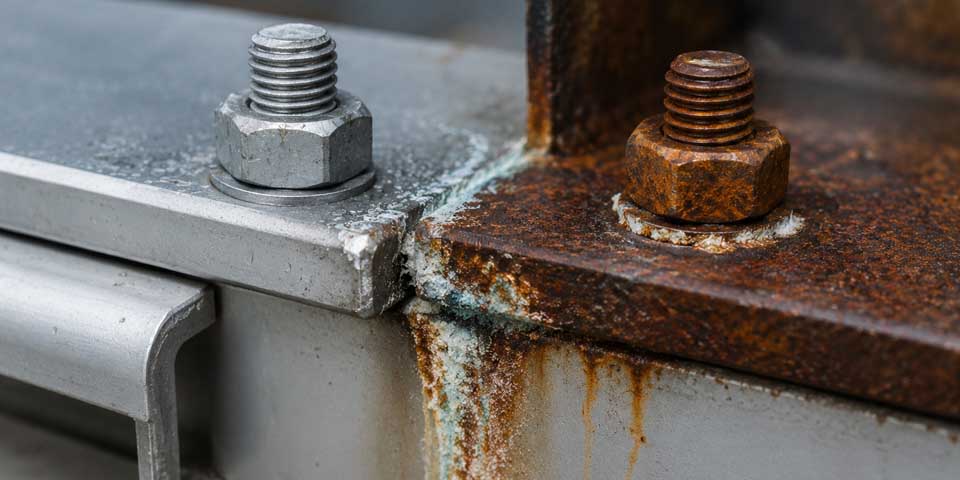
  • White powdery residue
  • Rust around fasteners
  • Discoloration
  • Pitting
  • Surface blistering
  • Coating failure
  • Premature hardware deterioration
  • Structural weakening

Routine inspections can help identify issues before major failures occur.

How Protective Coatings Prevent Galvanic Corrosion

One of the most effective methods for preventing galvanic corrosion is creating a barrier between dissimilar metals.

Protective coatings help by:

  • Interrupting electrical contact
  • Blocking moisture intrusion
  • Reducing chemical exposure
  • Protecting fastener surfaces
  • Extending service life

When properly applied, specialty coatings can dramatically reduce corrosion activity and improve component longevity.


Using Coated Fasteners

Fasteners are often the starting point for galvanic corrosion.

A coated fastener can:

  • Isolate metal surfaces
  • Reduce direct electrical contact
  • Improve corrosion resistance
  • Protect threaded assemblies
  • Extend maintenance intervals

This is particularly important in outdoor, marine, transportation, and industrial applications.


Material Selection Matters

Proper material selection is another critical factor.

Whenever possible, engineers should choose metals that are closer together on the galvanic series.

The closer the metals are electrochemically, the lower the risk of galvanic corrosion.

Designing for compatibility can significantly improve long-term reliability.


Environmental Conditions Affect Corrosion Rates

Not all environments produce the same level of risk.

Higher-risk environments include:

Coastal Areas

Saltwater dramatically increases conductivity and corrosion rates.

Chemical Facilities

Industrial chemicals can accelerate galvanic activity.

Water Treatment Plants

Constant moisture exposure creates ideal corrosion conditions.

Transportation Infrastructure

Road salt and weather exposure contribute to aggressive corrosion.

Manufacturing Facilities

Condensation and industrial contaminants often create corrosive environments.

Organizations operating in these environments should prioritize corrosion prevention strategies.


The Cost of Ignoring Galvanic Corrosion

Failing to address galvanic corrosion can result in:

  • Premature fastener failure
  • Increased maintenance expenses
  • Equipment downtime
  • Structural damage
  • Safety concerns
  • Reduced asset lifespan

In many cases, the cost of prevention is significantly lower than the cost of repair and replacement.


Industries That Benefit from Corrosion Prevention Coatings

Protective coatings provide value across numerous industries:

Manufacturing

Reduce maintenance and improve equipment reliability.

Aerospace

Protect critical assemblies exposed to varying environmental conditions.

Defense

Enhance durability and long-term performance.

Infrastructure

Protect bridges, rail systems, and public assets.

Transportation

Improve fastener and component lifespan.

Energy Production

Reduce corrosion-related failures in demanding operating environments.

Water Treatment

Prevent degradation caused by constant moisture exposure.

Learn More About Protective Coatings

Compliant Coatings

Explore coating technologies designed to protect industrial components from corrosion, environmental degradation, and costly maintenance issues.


Why EPC Coatings

At EPC Coatings, we help organizations combat corrosion challenges through advanced coating solutions designed for demanding industrial environments.

Every application presents unique challenges based on:

  • Materials used
  • Environmental exposure
  • Service life expectations
  • Regulatory requirements
  • Operational demands

Our coating technologies help customers improve reliability, extend asset life, and reduce the long-term costs associated with corrosion-related failures.


Conclusion

Galvanic corrosion is one of the most common causes of premature metal failure in industrial applications.

When dissimilar metals come into contact in the presence of moisture, corrosion can begin long before visible damage appears.

Fortunately, proper design practices, material selection, and advanced protective coatings can significantly reduce risk and extend the lifespan of critical assets.

For organizations looking to improve reliability and reduce maintenance costs, preventing galvanic corrosion should be a key part of any asset protection strategy.


Key Takeaways

  • Galvanic corrosion occurs when dissimilar metals come into contact in the presence of moisture.
  • The greater the difference between metals, the greater the corrosion risk.
  • Fasteners are common locations where galvanic corrosion begins.
  • Protective coatings help isolate metals and interrupt corrosion reactions.
  • Coastal, industrial, transportation, and chemical environments face higher corrosion risks.
  • Preventing galvanic corrosion can significantly reduce maintenance and replacement costs.

Frequently Asked Questions

What causes galvanic corrosion?

Galvanic corrosion occurs when two different metals are in electrical contact while exposed to an electrolyte such as water, humidity, or salt.

How can galvanic corrosion be prevented?

Protective coatings, coated fasteners, proper material selection, and isolating dissimilar metals can significantly reduce galvanic corrosion.

Is galvanic corrosion worse in saltwater environments?

Yes. Saltwater is highly conductive and accelerates galvanic reactions between dissimilar metals.

Which metals commonly experience galvanic corrosion?

Steel, aluminum, stainless steel, copper, brass, and zinc-coated metals commonly experience galvanic corrosion when paired with dissimilar materials.

Can coatings stop galvanic corrosion?

Properly designed coating systems can greatly reduce galvanic corrosion by preventing electrical contact and limiting moisture exposure.

Why is galvanic corrosion difficult to detect?

It often develops beneath fasteners, joints, and hidden assemblies where damage may not become visible until significant deterioration has occurred.


Zinc Plating vs Specialty Protective Coatings: Which Lasts Longer?

Zinc Plating vs Specialty Protective Coatings: Which Lasts Longer?

When engineers, maintenance managers, procurement teams, and manufacturers evaluate corrosion protection options, zinc plating is often one of the first solutions considered. Zinc coatings have been used for decades to protect fasteners, structural components, and industrial equipment from rust and environmental degradation.

However, today’s industrial environments are becoming increasingly demanding. Exposure to chemicals, road salt, moisture, extreme temperatures, and harsh operating conditions has many organizations questioning whether traditional zinc plating is still the best solution.

In many applications, specialty protective coatings are delivering longer service life, reduced maintenance costs, and significantly better long-term performance.

So which option lasts longer? The answer depends on the environment, application, and performance requirements.


Why Corrosion Protection Matters

Corrosion costs industries billions of dollars every year through:

  • Equipment failures
  • Unplanned downtime
  • Increased maintenance
  • Replacement costs
  • Safety concerns
  • Reduced asset lifespan

Whether you’re protecting fasteners, infrastructure, machinery, or critical industrial components, selecting the right protective system can dramatically impact long-term performance.

The goal isn’t simply preventing rust today—it’s maximizing service life for years to come.


What Is Zinc Plating?

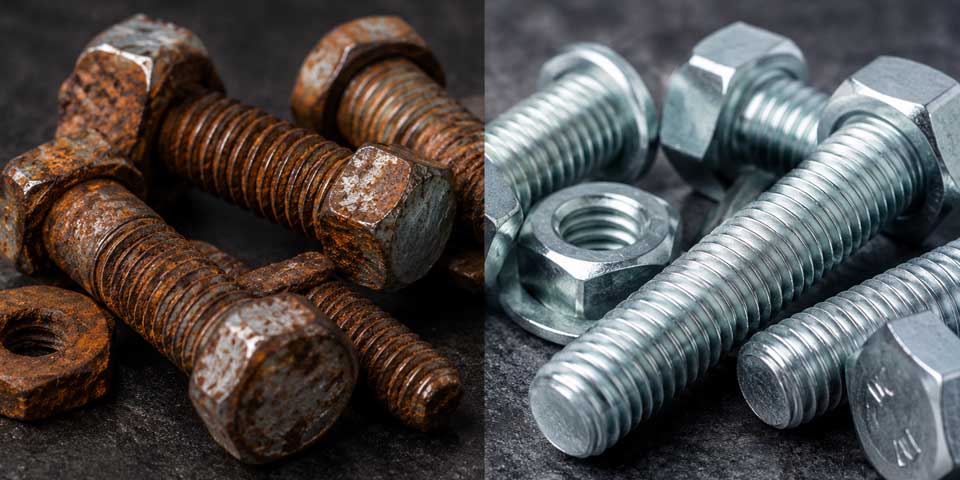
Zinc plating is a process that deposits a thin layer of zinc onto steel or iron components.

The zinc coating acts as a sacrificial layer that corrodes before the underlying steel.

This process helps delay rust formation and provides basic corrosion resistance in many applications.

Common uses include:

  • Nuts and bolts
  • Screws
  • Washers
  • Automotive components
  • Construction hardware
  • General industrial fasteners

Because zinc plating is relatively affordable and widely available, it remains one of the most common corrosion protection methods used today.


How Zinc Protects Metal

Zinc works through sacrificial protection.

Even if the coating becomes scratched or damaged, zinc continues protecting exposed steel because it corrodes first.

This characteristic provides an advantage over simple paint systems that may fail immediately once damaged.

However, sacrificial protection has limitations.

Once enough zinc is consumed, corrosion eventually begins attacking the underlying metal.


The Limitations of Zinc Plating

While zinc plating offers valuable protection, it is not designed for every environment.

Common challenges include:

Salt Exposure

Road salt and coastal environments accelerate zinc consumption.

Chemical Exposure

Many industrial chemicals degrade zinc coatings over time.

Abrasion

Physical wear can remove protective zinc layers.

Temperature Extremes

Certain operating temperatures reduce coating effectiveness.

Long-Term Durability

Aggressive environments can significantly shorten zinc-plated fastener life.

In severe conditions, maintenance teams often discover that zinc-coated components require replacement much sooner than expected.


What Are Specialty Protective Coatings?

Specialty protective coatings are engineered systems designed to provide enhanced resistance against corrosion, wear, chemicals, and environmental degradation.

Unlike traditional zinc plating, these coatings are formulated specifically for demanding industrial applications.

Depending on the application, specialty coatings may provide:

  • Enhanced corrosion protection
  • Chemical resistance
  • Salt spray resistance
  • Wear resistance
  • Temperature resistance
  • Improved lubricity
  • Better torque consistency
  • Reduced galvanic corrosion

These advanced technologies are commonly used in aerospace, defense, infrastructure, manufacturing, transportation, and energy industries.

Related EPC Service

Fastener Coatings

Discover how specialized fastener coating solutions can improve durability, corrosion resistance, and long-term performance in demanding industrial environments.

Comparing Zinc Plating and Specialty Coatings

Corrosion Resistance

Zinc Plating

  • Good in moderate environments
  • Limited lifespan in harsh conditions
  • Sacrificial protection

Specialty Coatings

  • Superior corrosion protection
  • Longer service life
  • Enhanced barrier protection

Winner: Specialty Coatings


Chemical Resistance

Zinc Plating

  • Moderate resistance
  • Vulnerable to aggressive chemicals

Specialty Coatings

  • Designed for chemical exposure
  • Better protection in industrial environments

Winner: Specialty Coatings


Salt Spray Performance

Road salt remains one of the most destructive forces affecting metal infrastructure.

Zinc Plating

  • Effective initially
  • Protection decreases as zinc is consumed

Specialty Coatings

  • Often engineered specifically for high salt exposure
  • Extended service life

Winner: Specialty Coatings


Maintenance Requirements

Zinc Plating

  • More frequent inspections
  • Earlier replacement schedules

Specialty Coatings

  • Longer maintenance intervals
  • Reduced lifecycle costs

Winner: Specialty Coatings


Initial Cost

Zinc Plating

  • Lower upfront investment

Specialty Coatings

  • Higher initial cost
  • Often lower total ownership cost

Winner: Zinc Plating (Initial Cost Only)


Understanding Lifecycle Cost

One of the biggest mistakes organizations make is focusing solely on initial coating costs.

A coating that costs slightly more upfront may provide:

  • Fewer replacements
  • Less downtime
  • Reduced labor costs
  • Lower maintenance expenses
  • Extended equipment lifespan

Over a 10-to-20-year period, specialty coatings frequently provide better overall value despite a higher initial investment.


Industries Moving Beyond Zinc Plating

Many industries are increasingly adopting advanced coating technologies.

Transportation Infrastructure

Bridges, highways, and transportation assets face constant exposure to moisture and road salt.

Manufacturing

Production equipment requires reliable protection to minimize downtime.

Water Treatment Facilities

Moisture exposure creates continuous corrosion challenges.

Energy Production

Critical infrastructure must perform reliably under harsh conditions.

Defense and Aerospace

Advanced coating systems help meet stringent performance requirements.

Chemical Processing

Aggressive environments demand superior corrosion resistance.


When Zinc Plating Is Still a Good Choice

Despite its limitations, zinc plating remains an effective solution for many applications.

It is often suitable when:

  • Corrosion exposure is limited
  • Service life requirements are shorter
  • Components are easily replaced
  • Budget constraints are significant
  • Environmental conditions are relatively mild

For many general-purpose fasteners, zinc plating remains a practical option.


When Specialty Coatings Make More Sense

Specialty coatings are often the better choice when:

  • Corrosion risk is high
  • Maintenance access is difficult
  • Downtime is expensive
  • Chemical exposure exists
  • Long service life is required
  • Infrastructure investments must last decades

In these situations, advanced coatings frequently outperform traditional zinc plating by a significant margin.

Read More About Corrosion Prevention

Compliant Coatings

Learn how specialized coating technologies help protect industrial components from corrosion, environmental degradation, and costly failures.

Why EPC Coatings

At EPC Coatings, we help organizations identify coating solutions that align with their specific environmental, operational, and performance requirements.

Every application is different.

Factors such as:

Exposure conditions
Material type
Service life expectations
Regulatory requirements
Maintenance goals

all influence which coating solution provides the greatest long-term value.

Our goal is helping customers maximize asset protection while minimizing lifecycle costs.

Conclusion

Zinc plating has protected industrial components for decades and remains a useful solution for many applications.

However, as operating environments become more demanding, many organizations are discovering that specialty protective coatings offer significantly longer service life, better corrosion resistance, reduced maintenance, and lower total ownership costs.

While zinc plating often wins on initial price, specialty coatings frequently win on long-term performance.

When asset reliability, durability, and lifecycle value matter most, advanced coating technologies can provide a substantial advantage.


Frequently Asked Questions

Is zinc plating enough to prevent rust?

Zinc plating helps prevent rust by providing sacrificial protection, but its effectiveness depends on environmental conditions and coating thickness.

What lasts longer than zinc plating?

Specialty protective coatings often provide longer service life in harsh environments, particularly where chemicals, salt, moisture, and extreme temperatures are present.

Why do zinc-coated fasteners still rust?

Over time, zinc is consumed through sacrificial corrosion. Once the zinc layer is depleted, the underlying steel becomes vulnerable to rust.

Are specialty coatings more expensive?

Specialty coatings typically cost more upfront but may significantly reduce maintenance and replacement costs over the life of the asset.

Which industries benefit most from specialty coatings?

Manufacturing, transportation, defense, aerospace, infrastructure, chemical processing, water treatment, and energy industries commonly benefit from advanced coating technologies.

Why Fasteners Fail Prematurely in Harsh Industrial Environments | EPC Coatings

Why Fasteners Fail Prematurely in Harsh Industrial Environments (And How Protective Coatings Can Prevent Costly Failures)

Fasteners are among the most overlooked components in industrial equipment, infrastructure, transportation systems, and manufacturing facilities. Yet when a bolt, screw, stud, or nut fails prematurely, the consequences can be severe. Equipment downtime, structural instability, expensive repairs, and safety risks often begin with something as simple as corrosion or coating failure.

Across industries including manufacturing, energy, defense, aerospace, transportation, chemical processing, and construction, fasteners are exposed to some of the harshest operating conditions imaginable. Moisture, chemicals, temperature extremes, vibration, road salt, and environmental contaminants constantly attack metal surfaces.

Understanding why fasteners fail is the first step toward preventing costly problems and extending the lifespan of critical assets.


The Real Cost of Fastener Failure

Many organizations underestimate the financial impact of fastener corrosion and degradation.

When fasteners fail, companies often experience:

  • Unexpected equipment downtime
  • Increased maintenance costs
  • Emergency replacement expenses
  • Structural integrity concerns
  • Production delays
  • Safety hazards
  • Reduced asset lifespan

In many cases, replacing a failed bolt or stud may only cost a few dollars. However, the downtime associated with that failure can cost thousands—or even millions—of dollars depending on the application.

For industrial facilities, preventing failure is almost always more cost-effective than reacting to it.


Corrosion: The Leading Cause of Fastener Failure

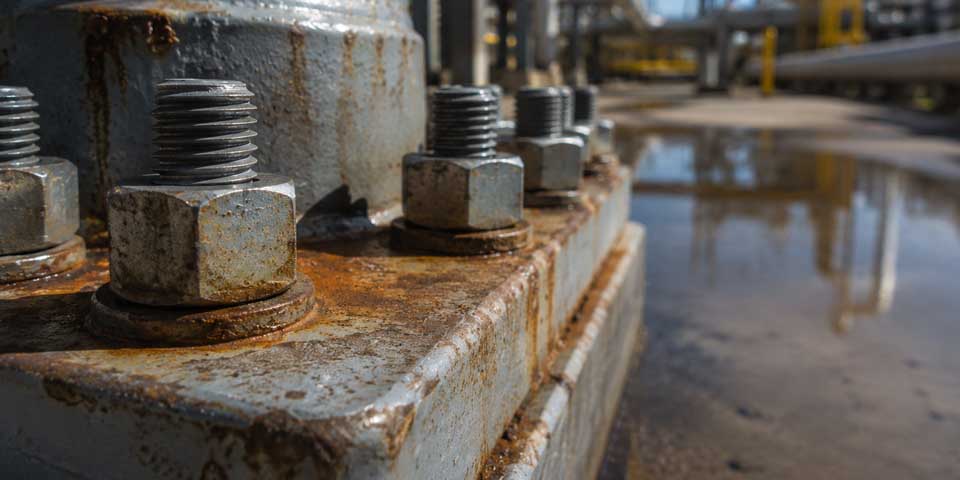
Corrosion remains the number one reason fasteners fail prematurely.

When metal fasteners are exposed to moisture, oxygen, salt, or chemicals, oxidation begins to occur. Over time, this process weakens the fastener and reduces its load-bearing capacity.

Common sources of corrosion include:

  • Outdoor weather exposure
  • Coastal environments
  • Road salt
  • Industrial pollutants
  • Chemical processing facilities
  • Water treatment plants
  • Agricultural operations
  • Manufacturing environments

Once corrosion starts, it often accelerates rapidly, especially when protective barriers are inadequate or damaged.


Galvanic Corrosion: A Hidden Threat

One of the most overlooked causes of fastener failure is galvanic corrosion.

Galvanic corrosion occurs when two dissimilar metals come into contact in the presence of an electrolyte such as water.

For example:

  • Stainless steel fasteners on aluminum structures
  • Carbon steel bolts on galvanized assemblies
  • Mixed-metal industrial equipment

Over time, one metal sacrifices itself and corrodes at an accelerated rate.

Many engineers encounter galvanic corrosion issues without immediately realizing the root cause, leading to recurring failures and maintenance challenges.

Proper coating systems can help isolate dissimilar metals and significantly reduce galvanic reactions.


Chemical Exposure Accelerates Degradation

Industrial facilities often expose fasteners to aggressive chemicals that can quickly destroy unprotected surfaces.

Examples include:

  • Acids
  • Alkalis
  • Solvents
  • Cleaning agents
  • Petrochemicals
  • Fertilizers
  • Process chemicals

Even highly durable metal alloys can experience accelerated degradation when continuously exposed to chemical attack.

Protective coatings create a barrier between the fastener and its operating environment, helping prevent direct chemical contact.


Vibration and Mechanical Fatigue

Not all fastener failures are caused by corrosion.

Many industrial systems experience constant vibration from:

  • Pumps
  • Motors
  • Compressors
  • Production machinery
  • Heavy equipment
  • Transportation systems

Repeated vibration cycles can loosen fasteners, weaken threads, and contribute to fatigue cracking.

Over time, microscopic cracks grow larger until catastrophic failure occurs.

Specialized coating systems can help improve performance by reducing friction, enhancing torque consistency, and improving long-term fastener reliability.

Related EPC Coatings Resource

Fastener Coatings

Learn how specialized coating systems can improve corrosion resistance, reduce maintenance costs, and extend the lifespan of industrial fasteners in demanding environments.

Temperature Extremes Can Damage Fasteners

Extreme temperatures can significantly affect fastener performance.

Industries that commonly encounter temperature-related issues include:

  • Aerospace
  • Defense
  • Energy production
  • Transportation
  • Industrial manufacturing

High temperatures can:

  • Accelerate oxidation
  • Degrade protective finishes
  • Reduce material strength

Low temperatures can:

  • Increase brittleness
  • Create thermal stress
  • Promote cracking

Protective coatings specifically engineered for temperature resistance can help maintain performance across a wide operating range.


The Limitations of Traditional Zinc Plating

Many fasteners rely on zinc plating for corrosion protection.

While zinc plating offers some benefits, it often struggles in highly aggressive environments.

Common limitations include:

  • Limited lifespan in salt exposure
  • Reduced effectiveness in chemical environments
  • Wear during installation
  • Damage from abrasion
  • Insufficient protection in severe industrial settings

As industrial demands increase, many organizations are turning to advanced coating technologies designed specifically for long-term durability.


How Protective Coatings Extend Fastener Life

Protective coatings are one of the most effective ways to increase fastener longevity.

Advanced coating systems can provide:

  • Enhanced corrosion resistance
  • Improved chemical resistance
  • Reduced galvanic corrosion
  • Better wear protection
  • Improved torque control
  • Longer maintenance intervals
  • Reduced lifecycle costs

By creating a durable barrier between the fastener and the environment, coatings help prevent many of the common failure mechanisms that shorten service life.


Industries That Benefit Most From Advanced Fastener Coatings

Protective fastener coatings are commonly used in:

Manufacturing Facilities

Equipment reliability is essential for maintaining production schedules and minimizing downtime.

Transportation Infrastructure

Bridges, rail systems, and transportation assets are constantly exposed to moisture and environmental contaminants.

Energy Production

Power generation facilities require long-term corrosion protection for critical components.

Defense and Aerospace

Military and aerospace applications demand consistent performance under extreme environmental conditions.

Water and Wastewater Facilities

Moisture exposure makes corrosion protection essential for long-term reliability.

Chemical Processing Plants

Aggressive chemical environments require specialized coating solutions capable of resisting degradation.


Signs Your Fasteners May Be Failing

Watch for these warning signs:

  • Visible rust or oxidation
  • Coating deterioration
  • Thread damage
  • Loosening under vibration
  • Discoloration
  • Cracking
  • Pitting corrosion
  • Increased maintenance frequency

Early detection can prevent major failures and reduce repair costs.


Choosing the Right Coating Solution

Selecting the proper coating depends on several factors:

  • Environmental exposure
  • Temperature requirements
  • Chemical resistance needs
  • Expected service life
  • Load requirements
  • Industry specifications
  • Regulatory requirements

An experienced coating provider can help identify the most effective solution for your specific application.


Why EPC Coatings

At EPC Coatings, we understand the challenges industrial organizations face when protecting critical fasteners and components from corrosion, wear, and environmental degradation.

Our coating solutions are designed to help manufacturers, contractors, infrastructure operators, and industrial facilities extend asset life, improve reliability, and reduce costly maintenance issues.

Whether you’re protecting fasteners used in manufacturing equipment, infrastructure, transportation systems, or specialized industrial applications, selecting the right coating system can make a significant difference in long-term performance.


Conclusion

Fastener failures rarely happen without warning. Corrosion, chemical exposure, galvanic reactions, vibration, and environmental stress gradually weaken components until failure occurs.

By understanding the causes of fastener degradation and implementing advanced protective coating solutions, organizations can significantly improve reliability, reduce maintenance costs, and extend the lifespan of critical assets.

For industries operating in harsh environments, investing in proper fastener protection isn’t simply a maintenance decision—it’s a long-term operational strategy.


Why do industrial fasteners fail prematurely?

Industrial fasteners commonly fail due to corrosion, chemical exposure, vibration, fatigue, temperature extremes, and galvanic corrosion between dissimilar metals.

What is the most common cause of fastener failure?

Corrosion is the leading cause of premature fastener failure in industrial environments.

Can coatings prevent fastener corrosion?

Yes. Specialized protective coatings create a barrier that helps prevent moisture, chemicals, salt, and contaminants from attacking metal surfaces.

What industries benefit from fastener coatings?

Manufacturing, aerospace, defense, transportation, infrastructure, chemical processing, water treatment, and energy production industries commonly utilize protective fastener coatings.

Are coated fasteners better than galvanized fasteners?

In many harsh environments, advanced coating systems provide greater durability, chemical resistance, and long-term protection compared to traditional galvanized finishes.

How do I know if my fasteners need replacement?

Visible rust, pitting, cracking, thread damage, loosening, or coating deterioration are common indicators that fasteners should be inspected or replaced.